The name
Ariadne held the thread.
In the Greek myth, one thread is what leads Theseus out of the labyrinth. Our project is named after the woman who gave it to him. Here, the thread is the fiber.
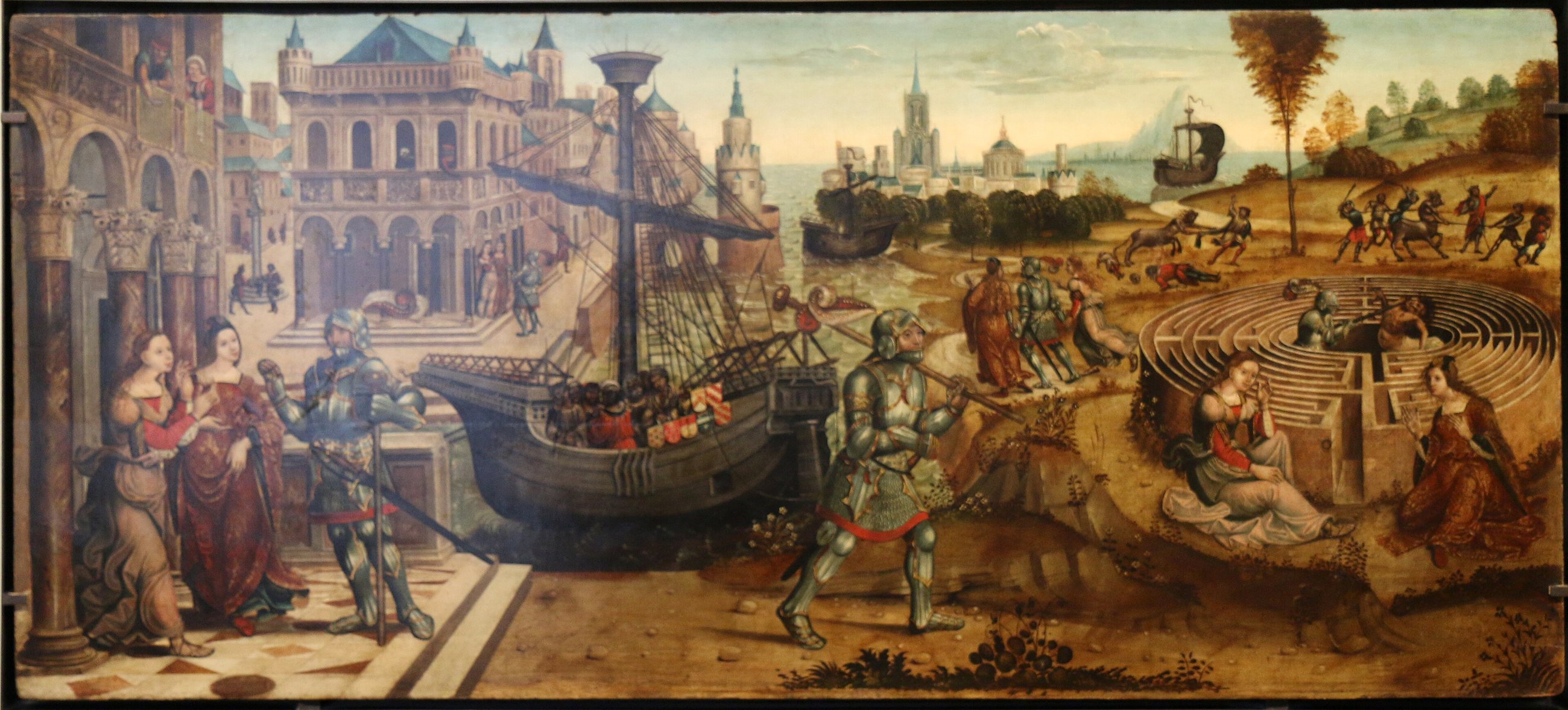
Master of the Campana Cassoni, Theseus and the Minotaur, about 1510. Public domain.
The myth
A maze, a monster and a ball of thread.
I
The labyrinth
King Minos of Crete kept a monster, the Minotaur, at the centre of a maze built by Daedalus. The maze was made so that nobody who walked in could find the way out.
II
The thread
When Theseus of Athens came to kill the Minotaur, Ariadne, the king’s daughter, gave him a ball of thread. He tied one end at the entrance and let it run out behind him as he went in.
III
The way back
Theseus killed the Minotaur. Then he did the simple thing that nobody before him could do: he picked up the thread and followed it back to where it began.
Two thousand years old
The oldest way out is to follow the line back.
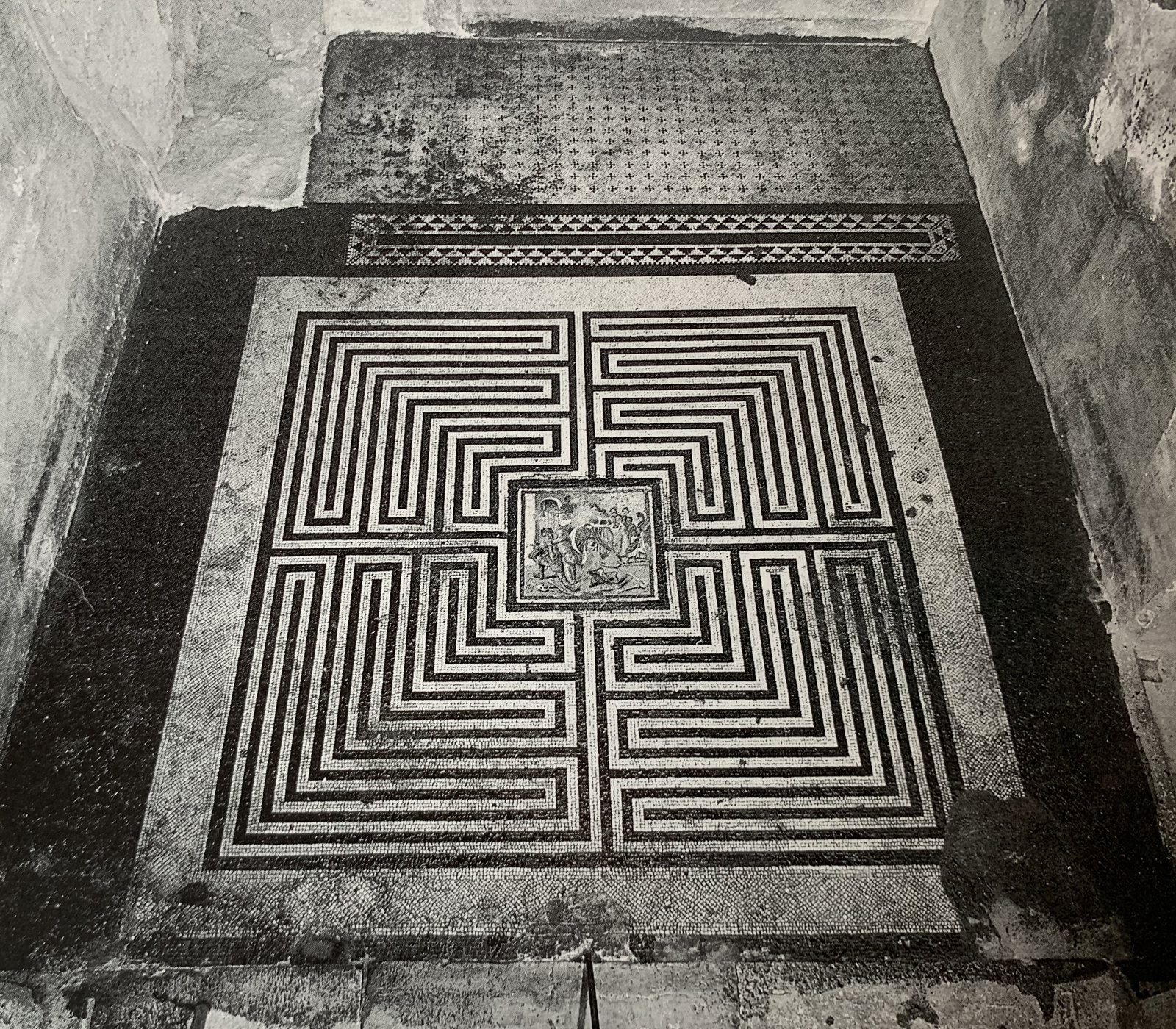
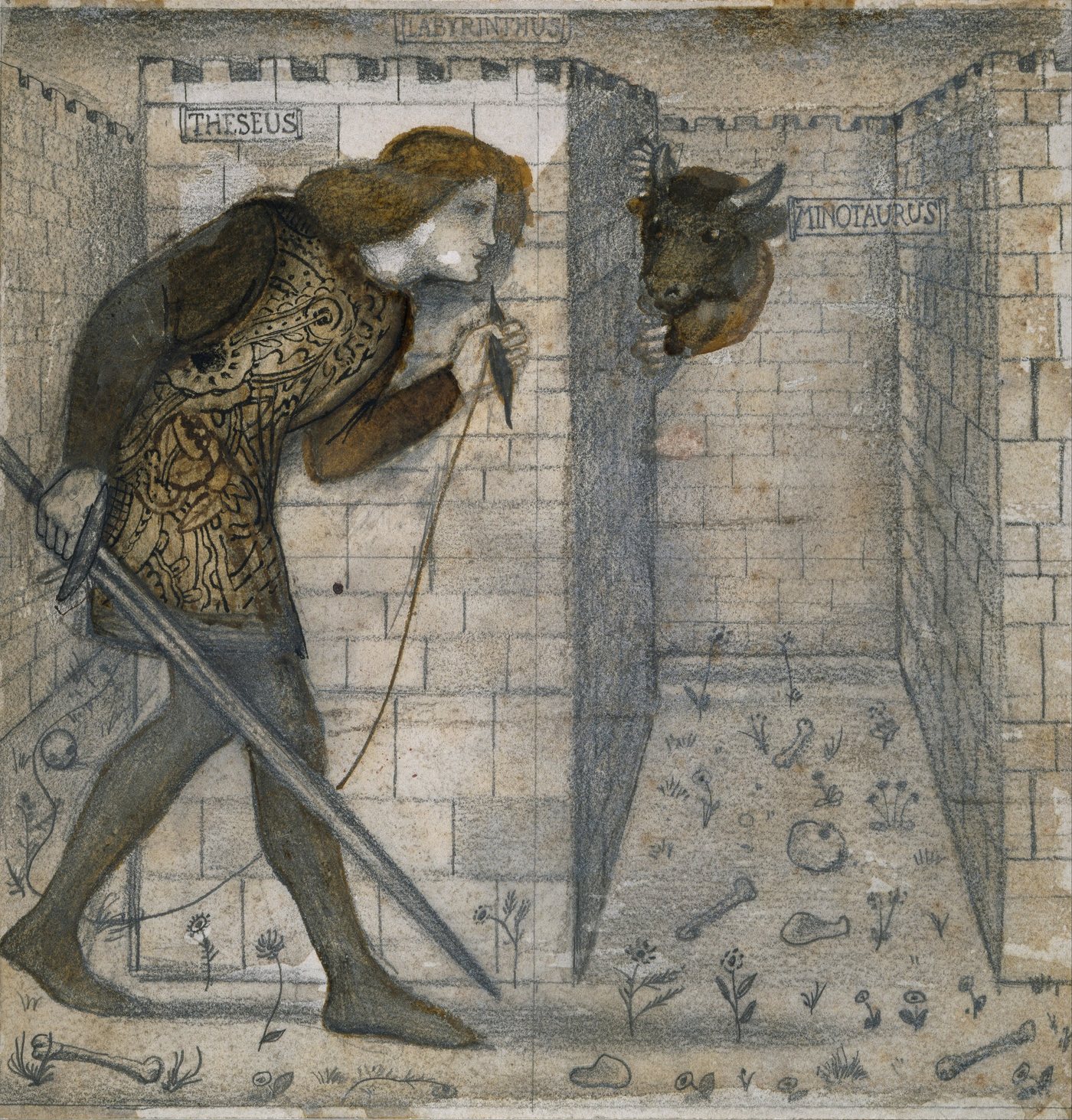
Artists have gone back to this story for two thousand years, from Roman floor mosaics to Victorian tile designs. The idea in it has not aged: when a path is too tangled to reason about, you do not solve the maze. You follow the one line that was laid through it.
English still carries the story. A ball of thread was once called a clew, and from Ariadne’s clew we get the word clue: the thing you follow to find what is hidden.
Why it fits
Here, the thread is the fiber.
A fiber-optic drone is steered through a glass fiber that unspools behind it. After the flight the fiber stays on the ground, and one end of it is where the drone was launched. That is our thread.
- The labyrinth
- A field crossed by old cables, where every line looks the same.
- The thread
- The fiber a drone leaves on the ground behind it as it flies.
- The place it was tied
- The launch site. One end of every fiber is there.
- Following it back
- A patrol drone that traces the fresh fiber to where it started.